Women in Construction: Daniel Owen Joins Lovell’s #WIC2026 Roundtable
20 Mar, 20265 MinutesAs part of Women in Construction Week 2026, Sarah Sidey, National Accounts Director at Danie...


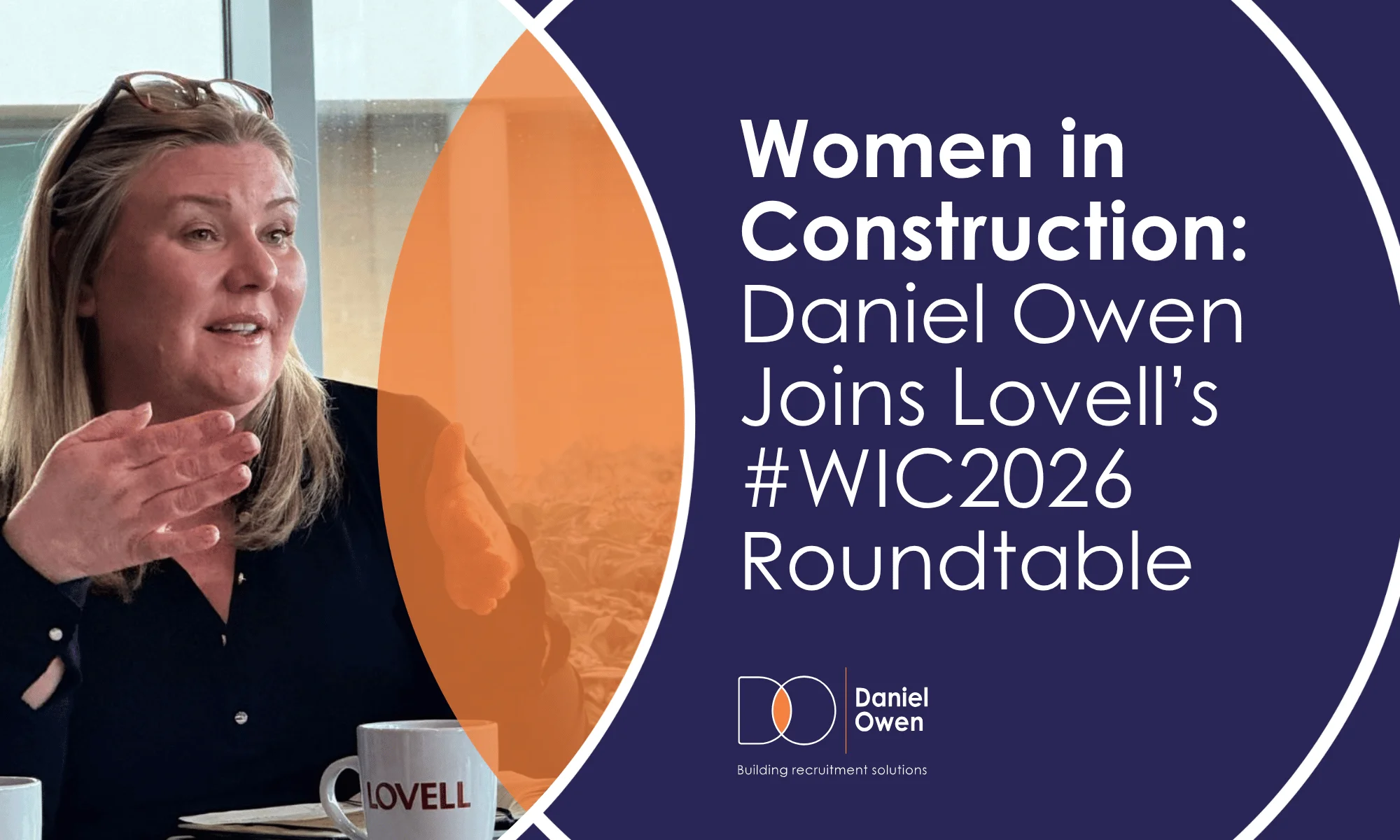
As part of Women in Construction Week 2026, Sarah Sidey, National Accounts Director at Daniel Owen, and Megan Brown from GSC Executives, attended a roundtable series hosted by Lovell.
The sessions brought together women from across the sector to share what’s working, what’s not, and what needs to happen next if we’re serious about making construction a place where more women can start, stay, and progress.
Other organisations represented included Durham County Council, Carney Consultancy Ltd, Constructing Excellence, Believe Housing, the Port of Tyne, and the Civil Engineering Contractors Association (CECA), with voices spanning recruitment, local authority, housing, consultancy and industry bodies.
Across the session, messages stayed consistent: progress depends on early engagement, stronger retention, clearer progression, culture-led inclusion, and joined-up pathways into real careers.
Lovell broke the roundtable into seven themes.
Day 1: Attracting girls and young women into the industry
This started where it should have, earlier in the journey.
The group spoke about visibility and exposure, because many girls and young women still don’t get a clear picture of what construction looks like today or the range of roles available beyond stereotypes.
“When girls are given real exposure to construction careers early on, interest rises quickly - we need to create more of those moments.” - Sarah Sidey, National Account Director, Daniel Owen
From a recruitment perspective, we see this all the time.
When someone can meet real people doing real jobs, and understand the routes in, the industry becomes far easier to imagine yourself in.
Day 2: Retention & visibility
Attracting women into construction is important; keeping them is the part that often gets missed.
Day two focused on what happens after someone gets their first role: the support around them, the culture they land in, and whether they can genuinely see a future for themselves.
Visibility came through as a major factor, particularly the impact of seeing women at different career stages, including leadership:
“Seeing women in leadership roles sends a powerful signal that progression in this industry is achievable.” | Samantha Curtis, Senior Land and Partnerships Manager, Lovell
Day 3: Progression, structure & allyship
The group explored how mentoring, sponsorship, and allyship (including male allyship) can remove barriers, but only when they are properly embedded rather than informal or dependent on luck.
As Victoria Beattie put it:
“Progression doesn’t happen by chance; structured development and sponsorship make a real difference.”| Victoria Beattie, Head of Estates, Port of Tyne
Day 4: Perception & influencers
This day zoomed out to the people shaping career choices long before recruitment starts, teachers, parents, and careers advisers.
The conversation highlighted how important it is to give influencers the confidence (and the facts) to talk about modern construction careers properly, because the industry has changed, but the perceptions often haven’t.
“Teachers and advisers are key influencers; giving them clear, practical information about construction careers is essential.” | Kate Lloyd, Sector Group Manager, CECA Policy
Day 5: Culture & inclusion
The group discussed what inclusion feels like day-to-day, both on-site and in the office, and the difference between having a policy and living it.
Angela Carney summarised it in a way that stuck:
“Inclusive culture starts at the top, but it has to be felt in everyday behaviours on site and in the office.” | Angela Carney, Managing Director, Carney Consultancy Ltd
Day 6: Pathways & continuity
A recurring theme throughout the week was the importance of clear, connected pathways from education into employment, so early interest doesn’t drop away due to uncertainty or lack of direction.
The roundtable noted that unclear routes can particularly impact women at the start of their careers:
“We need clearer, more connected pathways from education into employment if we want to convert interest into real careers.” | Debbie Howe, Social Value Officer, Durham County Council
Day 7: Collaboration & accountability
The final discussion focused on action, recognising that real progress requires shared responsibility among employers, educators, local authorities, recruiters, and industry bodies.
Collaboration was seen as the lever that could accelerate change:
“No single organisation can solve this alone; collaboration across the sector will accelerate progress.”
Ashleigh Tate, Marketing and Social Impact Manager, Lovell
What Daniel Owen took from the week
For us at Daniel Owen, being part of Lovell’s #WIC2026 roundtable was a reminder that a more inclusive industry doesn’t happen through good intentions alone.
It takes structure, consistency and accountability, from early exposure to supportive environments, to clear progression pathways.
As a recruitment partner to the built environment, we’re committed to doing our part: supporting clients to attract diverse talent, improve retention, and create cultures where people can progress with confidence (and stay for the long term).
Lovell’s approach, bringing people together to listen, share insight and shape practical action, sets the tone for the kind of long-term commitment the sector needs.
To find out more about our work during Women in Construction link, visit our insight below:
Daniel Owen Women in Construction Week >>
Related Posts

What the April 2026 Umbrella Changes Mean for You
18 Mar, 2026
Daniel Owen yet again ranks in the Recruiter Hot 100
10 Mar, 2026