What the April 2026 Umbrella Changes Mean for You
18 Mar, 2026


Awaab’s Law has shifted the operational requirements for social landlords.Damp and mould are...
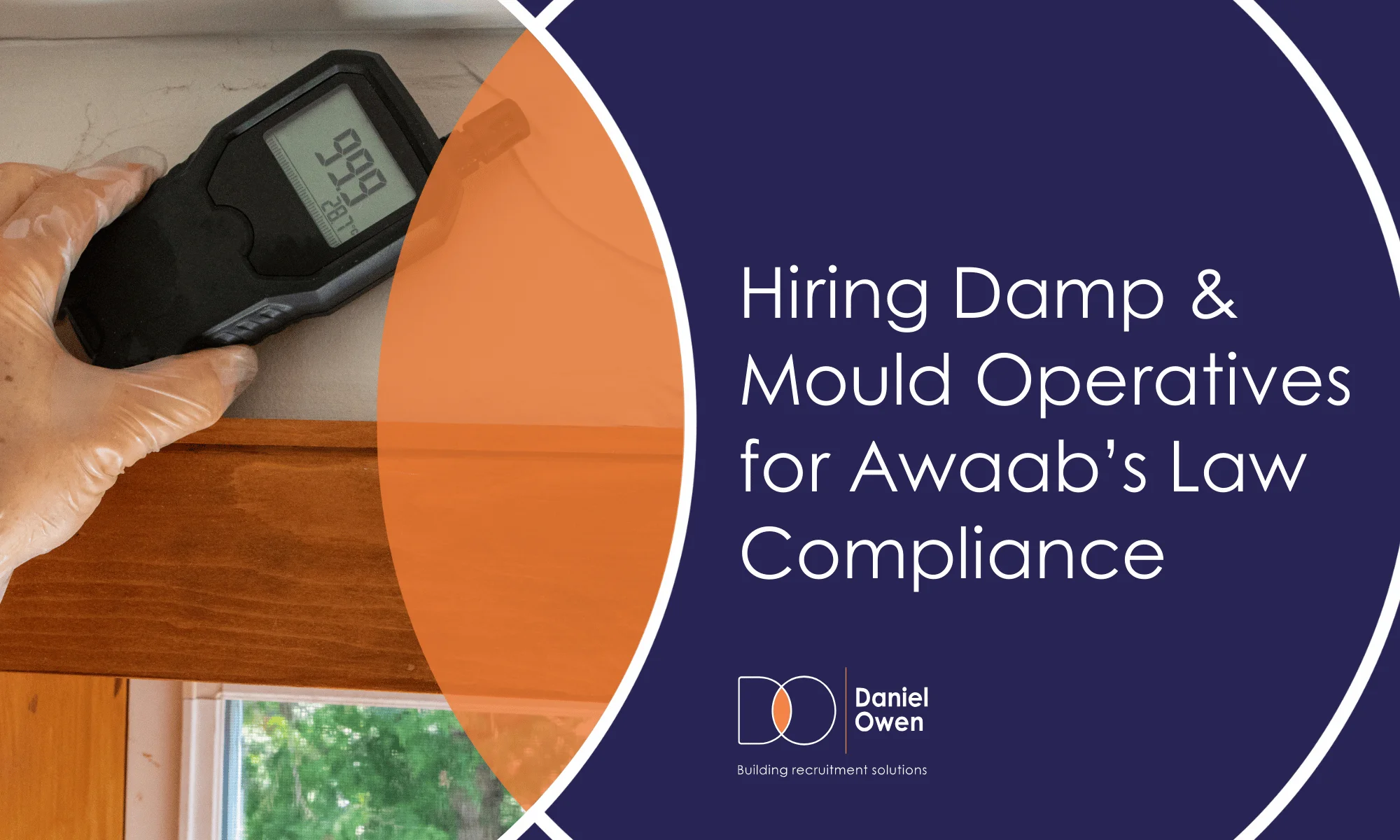
Awaab’s Law has shifted the operational requirements for social landlords.
Damp and mould are no longer routine repairs that can be put on hold. They are regulated health hazards with strict timeframes for investigation and repair. Relying on general multi-traders or stretched external surveyors to manage this workload is now a high-risk strategy.
To meet strict deadlines, ensure audit readiness, and protect residents, social housing providers must have a dedicated workforce model, starting with a specialist damp & mould operative.
Pre-Awab’s Law, damp was dismissed as a “lifestyle” issue, but government guidance and the Housing Ombudsman now demand a proactive approach to root causes.
Here’s why specialist staff are now necessary for compliance:
Learn more about the penalties of failing Awaab’s Law audits >>
A damp & mould operative is not simply a decorator with fungicidal wash. They bridge the gap between a technical surveyor and a tradesperson.
When hiring or upskilling, you should look for the following competencies:
Diagnostic skills:
They must be able to distinguish between condensation, rising damp, and penetrating damp, and to utilise hygrometers and thermal imaging cameras to identify thermal bridging.
Technical remediation:
Beyond cleaning, they need the skills to install or repair mechanical ventilation (PIV systems, humidistat fans), fit passive vents, and apply thermal solutions.
Tenant communication:
This is critical. They need the soft skills to educate residents on heating and ventilation without blaming, acting as empathetic representatives of your social housing organisation.
Data logging:
A strict, disciplined approach to logging all data for audits. Including before-and-after photos, humidity levels, and detailed case notes.
Upskilling into damp & mould operatives requires more than a single training course. Their current role must be restructured so that investigation, compliance and resident communication are core responsibilities, not secondary tasks.
Performance should be measured on accurate diagnosis, audit-ready evidence and tenant outcomes, rather than speed of ticket closure.
Operatives need protected time to carry out surveys, record moisture readings and upload photographic evidence in line with Awaab’s Law. This shift turns rapid responders into accountable specialists who own cases from first visit to sign-off.
Targeted training in damp and mould awareness, diagnostic surveying, ventilation systems, compliance record-keeping and resident communication, supported by in-house mentoring, creates a clear progression route into specialist roles.
With the right structure, existing teams can deliver a compliant damp & mould service that meets the requirements of Awaab’s Law.
If you rely on standard operatives, you risk missing the underlying structural defects that cause mould.
This leads to a cycle of recurring issues, deteriorating tenant health, and a breakdown of trust.
From a business perspective, this significantly increases the risk of expensive housing disrepair claims, enforcement notices, and severe reputational damage.
A specific damp and mould recruitment strategy is the only way to demonstrate you have taken all reasonable steps to keep homes safe.
Learn more about the penalties of failing Awaab’s Law audits >>
Finding candidates who possess both the technical understanding and the specific soft skills required for social housing can be challenging.
We understand that damp and mould jobs in social housing require a specific calibre of candidate.
We support Housing Associations and Local Authorities by sourcing damp & mould operatives, disrepair surveyors and compliance staff, all screened for social housing experience.
Speak to our social housing recruitment specialists today to discuss the skilled operatives and surveyors available in your area.