What Does a Net Zero Building Look Like?
09 Sept, 2026


You have your NVQ Level 3, you’ve passed the AM2, and you hold that essential ECS Gold Card....
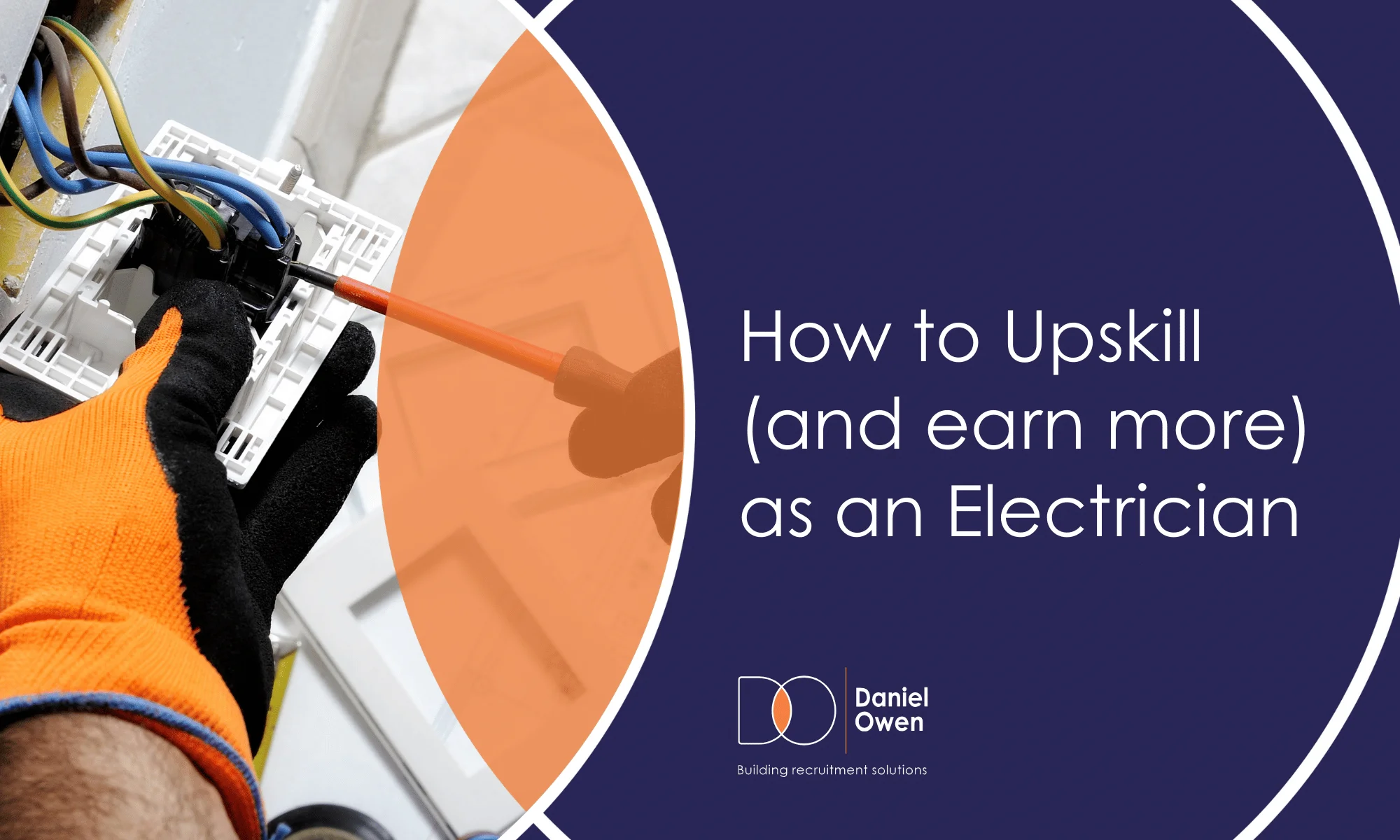
You have your NVQ Level 3, you’ve passed the AM2, and you hold that essential ECS Gold Card. In the industry's eyes, you are a solid, fully qualified electrician.
But for many ambitious sparky’s, "fully qualified" is just the baseline.
Between Net Zero targets, tightening building safety regulations, and a shortage of site managers, the demand for specialised electrical skills is booming.
Upskilling as an electrician is the most effective way to secure a significant pay rise, potentially move off the tools, or future-proof your career.
Whether you are eyeing the renewables boom (solar PV and EV), looking to step up into an electrical supervisor role, or want to dominate the testing market, this guide maps out your next 1–3 years.
The construction and social housing sectors are currently fighting over talent in three specific areas:
If you stay as a standard installation electrician, you will earn a decent living. If you specialise, you command a premium.
Solar is now common for new-build properties and a major retrofit focus for social housing stock. PV solar training for electricians is the gateway to this market.
Solar PV involves designing, installing, and commissioning domestic and commercial solar PV systems and battery storage units, and often integrating EV charging points.
You need your NVQ Level 3 and the current 18th Edition. Ideally, you should have 1–2 years of general commercial or domestic experience.
You will need a Level 3 in the Installation of PV systems and an EV charge point installation certificate (C&G 2921) to progress in PV solar work.
Your typical career path would be to start as a PV Mate/Improver, move to an installer, then to a lead installer, and eventually to a supervisor.
Theoretical Scenario – What to Expect:
Sarah qualified three years ago and was working on standard domestic refurbishments. She noticed her firm turning away from solar work. She self-funded a Level 3 PV course and an EV charging ticket (total cost £2k). Within 18 months, she became the Lead Solar Electrician on a housing association retrofit contract, earning 25% more than in her previous role.
If you are a natural organiser and ready to spend less time on the tools and more time managing people, this is your route. The electrician-to-supervisor UK pathway is well-trodden, but still gratuitous.
This role involves overseeing site teams, managing apprentices, ensuring health and safety compliance, and authorising works.
You must have an NVQ Level 3, 18th Edition, ECS Gold Card, and typically 3–5 years of site experience. You need to know how a site runs before you can run one.
Key Qualifications & Investment:
Pro Tip: If you work in Rail, combining your PTS (Personal Track Safety) with supervisory qualifications makes you incredibly valuable to framework contractors.
This provides the fastest pay uplift for detail-oriented electricians.
With the Building Safety Act biting hard, the electrical testing and inspecting qualification is your golden ticket.
It involves conducting EICRs (Electrical Installation Condition Reports), initial verification of new installs, and ensuring older housing stock is safe. It is less physically demanding than pulling cables, but it carries greater responsibility.
You must have a solid understanding of BS 7671 for this role (alongside your usual qualification and experience).
Key Qualifications:
Why choose this route?
Demand is exploding in Social Housing maintenance. Property managers are under pressure to ensure electrical safety. A 2391 electrician can often earn well for out-of-hours call-outs.
Don't just drift into a course. Plan it out for the best results.
Once you have upskilled, you become a different calibre of candidate. You need a recruitment partner who understands the value of those tickets.
We partner with the UK's leading construction, rail, social housing, and FM contractors to find technical specialists.
We can help you benchmark your new salary, prepare for competency-based interviews, and match you with employers who respect your upskilled status.