What Is a Multi Trader – And Is It Worth It for Your Career?
15 Apr, 20265 MinutesIn the UK construction and maintenance sector, one term you will hear frequently is "Multi T...
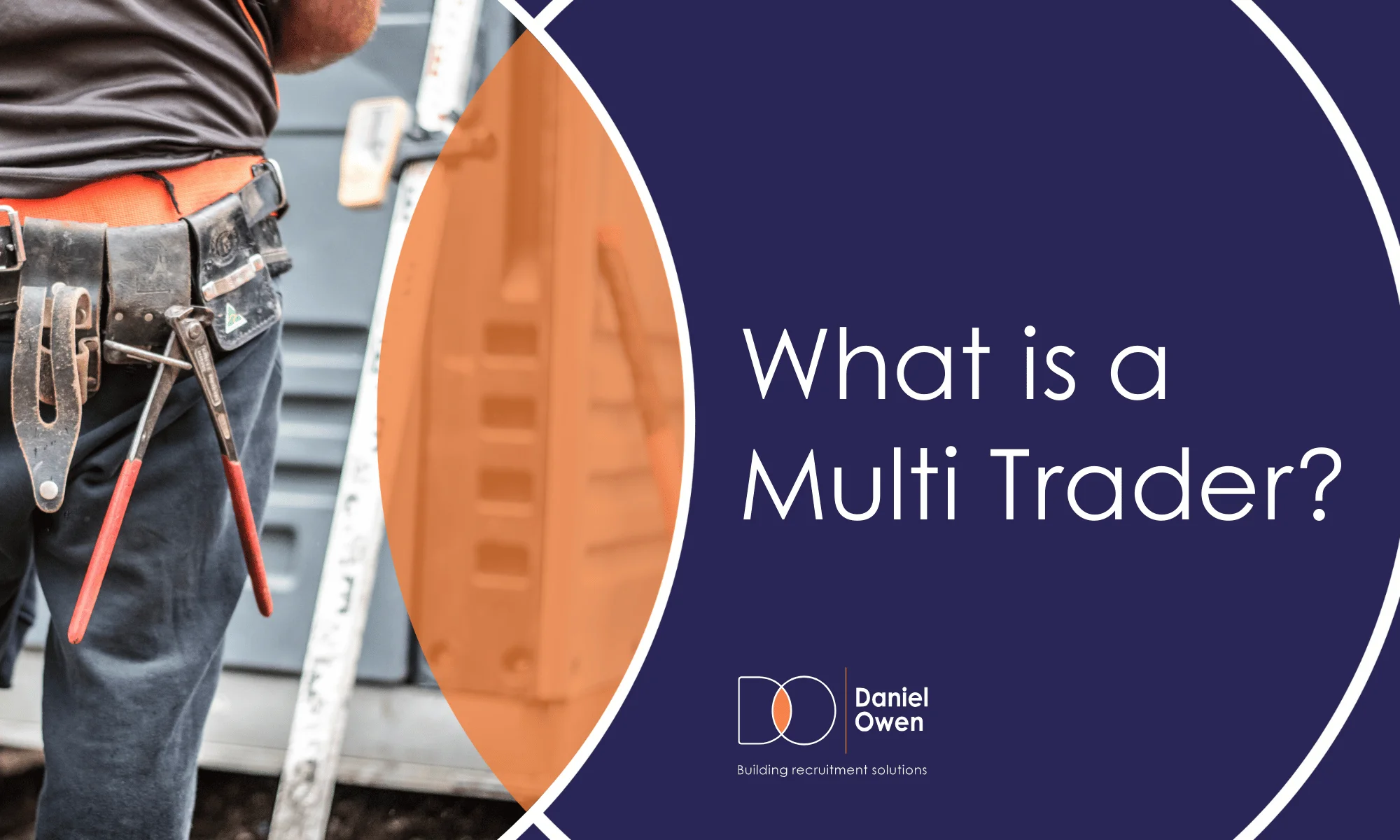
In the UK construction and maintenance sector, one term you will hear frequently is "Multi Trader.", but what does that mean?
Put simply, a Multi Trader (or multi-skilled tradesperson) is someone competent in several different trades. Instead of being just a plumber or a carpenter, a multi-trader can handle a main trade plus basic tasks in others, such as tiling, patch plastering, painting, or minor plumbing.
Construction, facilities management and property service companies love Multi Traders. Why? Because one person can visit a property and fix three different problems in a single trip.
If you are thinking about broadening your skills or applying for a Multi Trader job in the UK, here is everything you need to know.
What does a Multi Trader do day-to-day?
If you like variety, this is the role for you. A Multi Trader’s duties change every day. You rarely do the same task for eight hours straight.
Your day depends on your main skill set (often described as "Carpentry based" or "Plumbing based"), but typical tasks include:
- Carpentry: Hanging doors, fixing skirting boards, repairing kitchen units, or boxing in pipework.
- Plumbing: Fixing leaking taps, unblocking sinks, or replacing toilet siphons.
- Wet Trades: Tiling a kitchen splashback, patching plastering a hole in a wall, or re-sealing a bath.
- Decorating: Painting a room after a repair, filling cracks, or wallpapering.
- External Works: Minor fencing repairs or fixing guttering.
For example, if you worked in social housing, your day might look like this:
- Arrive at a tenant’s house to fix a stuck fire door (Carpentry).
- Drive to the next job. Replace a cracked tile and re-seal a shower tray (Tiling/Plumbing).
- Head to an empty property (Void). Patch up a hole in the plasterboard and paint the wall (Plastering/Decorating).
- Replace a broken lock on a garden gate (Carpentry).
What sectors do multi-traders work in?
Most Multi Traders work in:
- Social Housing:
Working for councils or housing associations. This includes "Responsive Repairs" (fixing things when tenants call) or "Voids" (getting an empty house ready for new tenants). - Facilities Maintenance:
Looking after schools, hospitals, offices, or universities. - Construction & Refurbishment:
Assisting on smaller building sites or house renovations.
Multi Trader vs Single-Trade Operative: What’s the difference?
Should you specialise or generalise? Here is how they compare.
Single-Trade (e.g., Electrician, Bricklayer, Joiner)
- Focus: You are an expert in one specific area.
- Work type: You are often called in for complex installations, structural work, or dangerous tasks (like gas or mains electrics).
- Team: You often work alongside other trades on bigger sites.
Multi Trader
- Focus: You typically have broader knowledge and focus on problem-solving.
- Work type: You handle snagging lists, maintenance, and repairs. You are the person who finishes the job, so three different tradies aren’t needed on one job.
- Team: You often work alone in a van, managing your own day.
Multi Trader vs single trade comes down to personality. If you aren’t keen on doing the same thing every day, Multi Trade is a better option. If you love the technical depth of just one craft, stick to a single trade.
Can multi-traders earn more than single-trade operatives?
Because you save the employer money (by reducing the number of vans they send to a job), skilled Multi Traders are in high demand. That can mean your earning potential is higher due to the competitiveness that comes with that demand and plenty of overtime to rely on if you’re seeking to boost your take home pay.
- Employment Type: You can be employed directly (PAYE), work through an agency, or go self-employed (CIS).
- The Package: In maintenance roles, the hourly rate is important but look at the whole package. Many Multi Trader jobs come with, as standard, a company van, fuel card, uniform, and a PDA/iPad.
- Overtime: There is often plenty of overtime or "call-out" work available for emergency repairs, which boosts your take-home pay.
Generally, a good Multi Trader will often earn a salary higher than a standard single-trade operative in the maintenance sector.
Curious what Multi Traders are earning in your area? Chat to our team for a free pay rate check >>
What skills and qualifications do you need?
You don’t need a degree, but you do need competence.
1. Technical Skills & Tickets
- Core Trade: Most employers want to see an NVQ Level 2 or 3 (or City & Guilds) in a main trade like Carpentry or Plumbing.
- Experience: You need proven experience in other trades. You can't just say you can plaster; you need to be able to leave a smooth finish.
- CSCS Card: Essential for getting on site.
- Driving Licence: Almost mandatory. You will likely be driving a van between jobs.
- Asbestos Awareness: A very common requirement for social housing work.
2. Soft Skills
- Communication: You are often working in people's homes (sometimes with vulnerable residents). You need to be polite, tidy, and respectful.
- Technology: Jobs are sent to mobile phones or iPads. You need to be comfortable using these apps to close jobs and order materials.
- Problem Solving: You are often on your own. If you uncover a problem behind a bath panel, you need to decide how to fix it safely.
How to become a Multi Trader
Most multi-traders start with a single trade. Here is how to make the switch:
- Upskill on the job: If you are a carpenter on a site, ask the tiler or plasterer to show you the basics. Offer to do the "making good" on your own jobs.
- Take short courses: Look for short training courses in tiling, patch plastering, or basic plumbing to add to your CV.
- Build a portfolio: Take photos of your work. Show a recruiter that you can hang a door and tile a bathroom.
- Start with "Making Good": If you aren't ready for full multi-trade, look for roles that ask for "Carpentry with making good".
Pros and Cons of being a Multi Trader
The Pros
- Job Security: There is a shortage of multi-skilled tradespeople. There are always repairs to be done.
- Variety: No two days are the same, good for some.
- Independence: You are often your own boss for the day, managing your own van and schedule.
The Cons
- Pressure: You are expected to fix things "first time." You can't leave a job half-done.
- Tool costs: You might need a wider range of hand tools than a single trade (though employers often provide your tools).
- Lone working: It can be lonely working on your own all day compared to a busy building site.
How to Find Multi-Trade Work
Finding the right Multi Trader job in the UK can be tricky. Some employers want a "Plumber who can paint," while others want a "Carpenter who can tile."
This is where Daniel Owen helps.
As a specialist recruitment agency for the built environment, we know exactly what our clients are looking for. We work with the UK’s biggest social housing providers, maintenance contractors, and construction companies.
We can help you:
- Match your specific skill mix to the right job.
- Find roles in your local area (reducing your travel time).
- Understand the difference between PAYE and CIS contracts.
Ready to start applying?
Related Posts
What is Mission-Critical Infrastructure?
23 Sept, 2026