Tackling Modern Slavery Across the Built Environment: Anti Slavery Day 2026
18 Oct, 20267 MinutesOn 18 October, we mark UK and European Anti-Slavery Day, the culmination of Anti-Slavery Wee...

On 18 October, we mark UK and European Anti-Slavery Day, the culmination of Anti-Slavery Week (Monday 12 to Sunday 18 October 2026).
Since the Anti-Slavery Day Act 2010 established a national day to raise awareness of slavery, human trafficking and exploitation, the conversation has moved forward. But the problem hasn't gone away. It has grown.
This year's theme is See Every Worker. It's a simple idea with serious implications for the built environment, where workers can easily become invisible behind layers of agencies, subcontractors and supply chains.
As a long-term Partner of Stronger Together, Daniel Owen is using Anti-Slavery Week to help clients, contractors and employers turn awareness into action.
Learn more about our partnership with Stronger Together >>
Modern Slavery and Exploitation: The Facts
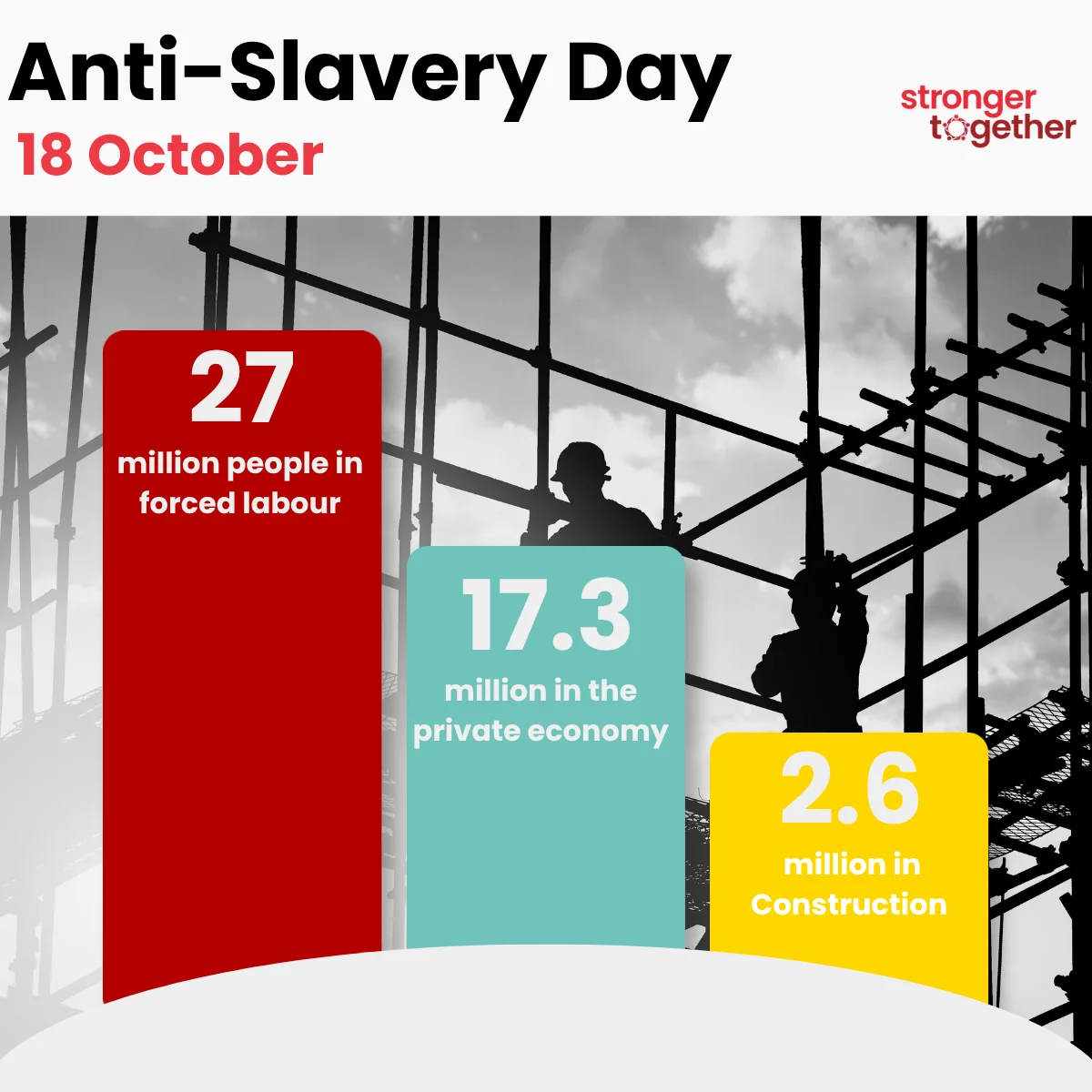
The scale of modern slavery is staggering:
- 50 million people are estimated to be living in modern slavery globally
- 27 million of those people are in forced labour
- 17.3 million are exploited in the private economy, within the supply chains of everyday businesses
- 2.6 million people are in forced labour in construction
- $486 billion is the estimated value of goods made with forced labour linked to G20 countries
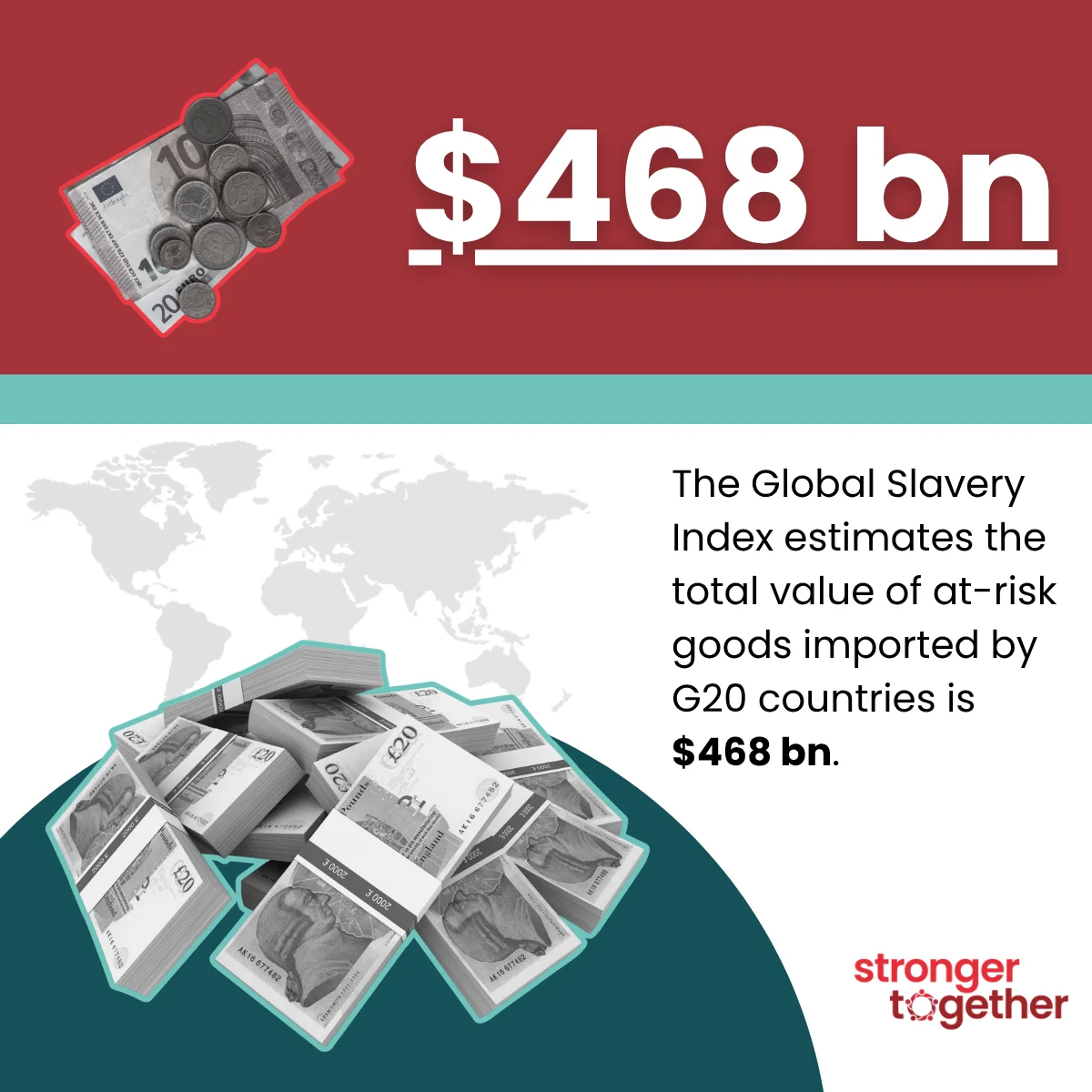
Construction is one of the private-sector industries most affected by forced labour, alongside agriculture and manufacturing.
This isn't a distant problem confined to overseas supply chains. The risk can be present on UK sites, in maintenance teams, and across the contractors and suppliers we work with every day.
A hidden crime
Modern slavery and labour exploitation are often hidden. People experiencing them are unlikely to come forward, whether through fear, control by others, or worry about what will happen if they speak up.
If victims can't come forward, it falls to employers, supervisors and colleagues to notice.
Tackling modern slavery takes a collective effort across government, civil society and the private sector, and across every level of a business itself.
An Evolving Responsibility for Businesses
The legislative landscape is tightening, and businesses face a growing scope of responsibility for tackling modern slavery and preventing exploitation. Key developments include:
- The latest Transparency in Supply Chains guidance, raising expectations on how organisations identify, assess and report on modern slavery risks
- The introduction of the Fair Work Agency, strengthening enforcement of workers' rights
- Wider regulatory developments placing greater scrutiny on how labour is recruited, supplied and managed
For construction, facilities management (FM) and property services, sectors that rely heavily on agency labour and subcontracting, this is significant. Businesses need visibility over who is working in their operations and supply chains, and how they got there.
Why the Built Environment Is High Risk
Construction consistently ranks among the most at-risk industries for modern slavery, and FM and property services share many of the same risk factors:
- Heavy reliance on agency and temporary labour
- Complex subcontracting chains that reduce visibility and oversight
- Tight deadlines and cost pressures, which can encourage corners to be cut
- A high proportion of migrant workers who may be unfamiliar with their rights or reluctant to raise concerns
Every additional layer between the client and the worker is another place where exploitation can hide.
Spotting the Signs of Modern Slavery in Construction
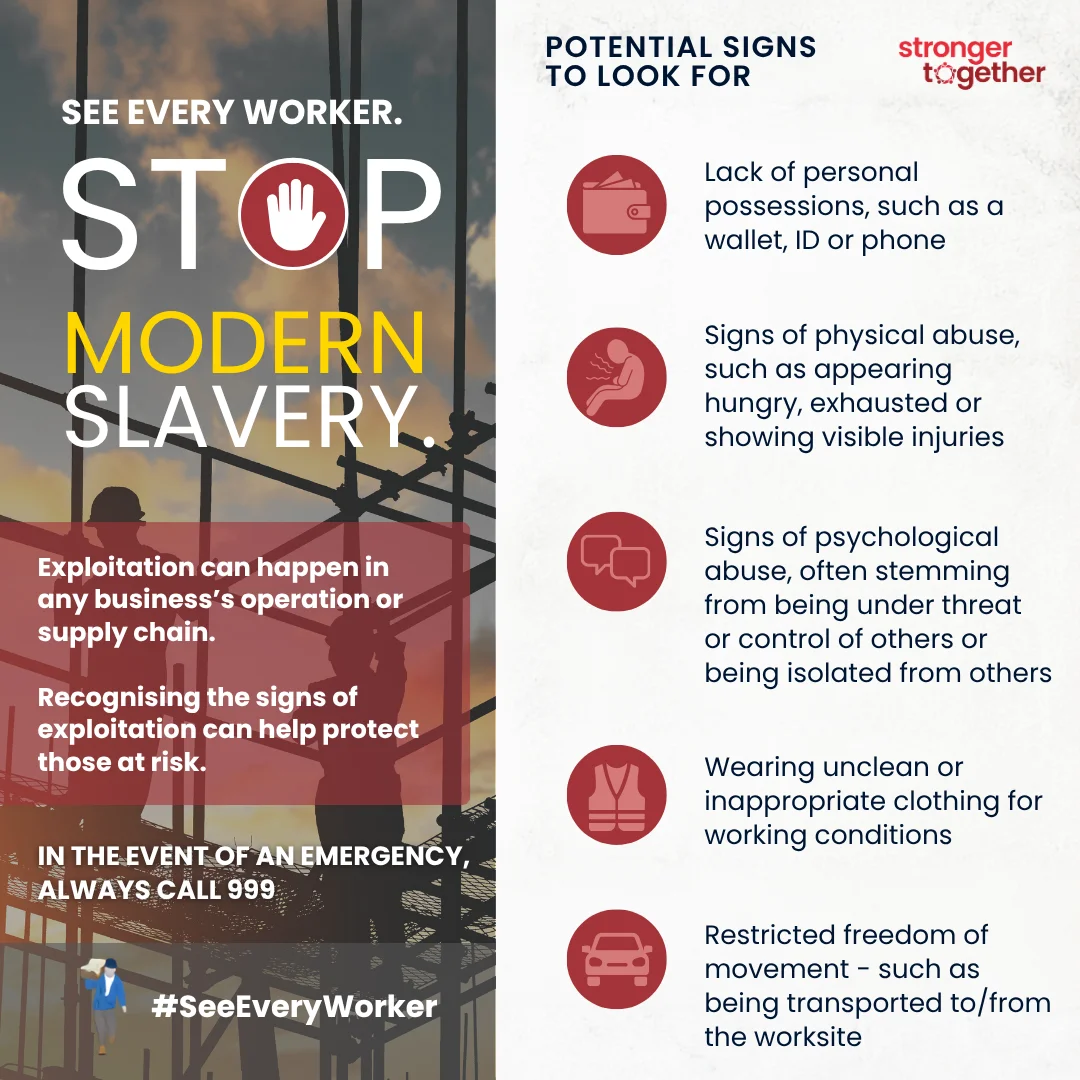
Recognising the signs early can protect individuals and prevent serious harm.
Indicators in construction and across the wider built environment include:
Physical and personal signs
- Lack of personal possessions, such as a wallet, ID or phone
- Signs of physical abuse, such as appearing hungry or exhausted, or having visible injuries
- Unclean or inappropriate clothing for the working conditions
Signs of control
- Signs of psychological abuse, such as fear or withdrawal stemming from threats or being under the control of others
- Restricted freedom of movement, such as being transported to and from the worksite
- Personal documents held by someone else, including passports or ID
Pay and living conditions
- Confusion about pay or deductions, or wages that don't match agreed rates
- Multiple workers paid into the same bank account
- Shared or overcrowded accommodation arranged by an employer or third party
No single sign proves exploitation, but any of them is a reason to look more closely and report concerns through the right channels.
What Can You Do?
- Understand your supply chain. Ask labour providers where workers come from, how right-to-work checks are carried out, and whether subcontracting is permitted.
- Train your supervisors. Frontline managers are best placed to see every worker. Role-specific training, such as Stronger Together's, helps them spot the signs and respond safely.
- Create safe reporting channels. Display helpline details in multiple languages and provide a named welfare contact.
- Audit regularly. Check pay records, accommodation details and ID documents, including through random spot checks.
- Act responsibly. Never confront a suspected exploiter. Always follow official reporting procedures.
How to Report Modern Slavery
If you suspect someone may be at risk, it’s vital to act, even if you’re unsure.
You can report concerns confidentially through:
- Modern Slavery Helpline - 08000 121 700 or www.modernslaveryhelpline.org
- Gangmasters and Labour Abuse Authority (GLAA) - www.gla.gov.uk
- Stronger Together - www.stronger2gether.org
- Crimestoppers (anonymous) - 0800 555 111
Reporting protects workers, helps with investigations, and reinforces ethical standards across our industries.
Daniel Owen’s Commitment to Ethical Recruitment
At Daniel Owen, our mission is to ensure every worker is treated fairly, legally and with respect.
We uphold this by:
- Partnering with Stronger Together to share best practices across the built environment
- Conducting rigorous vetting and compliance checks for all candidates and clients
- Offering guidance for clients and consultants to ensure responsible recruitment
- Promoting open dialogue and continued education around ethical labour standards
We believe that by embedding integrity into every stage of recruitment, we help create safer, more transparent workplaces for everyone involved.
Further Resources
- Stronger Together
- National Crime Agency: Modern Slavery and Human Trafficking
- Gangmasters and Labour Abuse Authority Guidance
Working Together for Progress
Modern Slavery Day is an essential reminder that awareness must translate into action year-round.
Whether you’re managing a construction site, overseeing property maintenance, or coordinating facilities services, vigilance is absolutely vital.
Together, we can build ethical recruitment practices, stronger supply chains, and safe environments for every worker.
Let’s focus on building ethical recruitment practices, stronger supply chains, and safe environments for every worker, 365 days a year.
Related Posts
What is Mission-Critical Infrastructure?
23 Sept, 2026